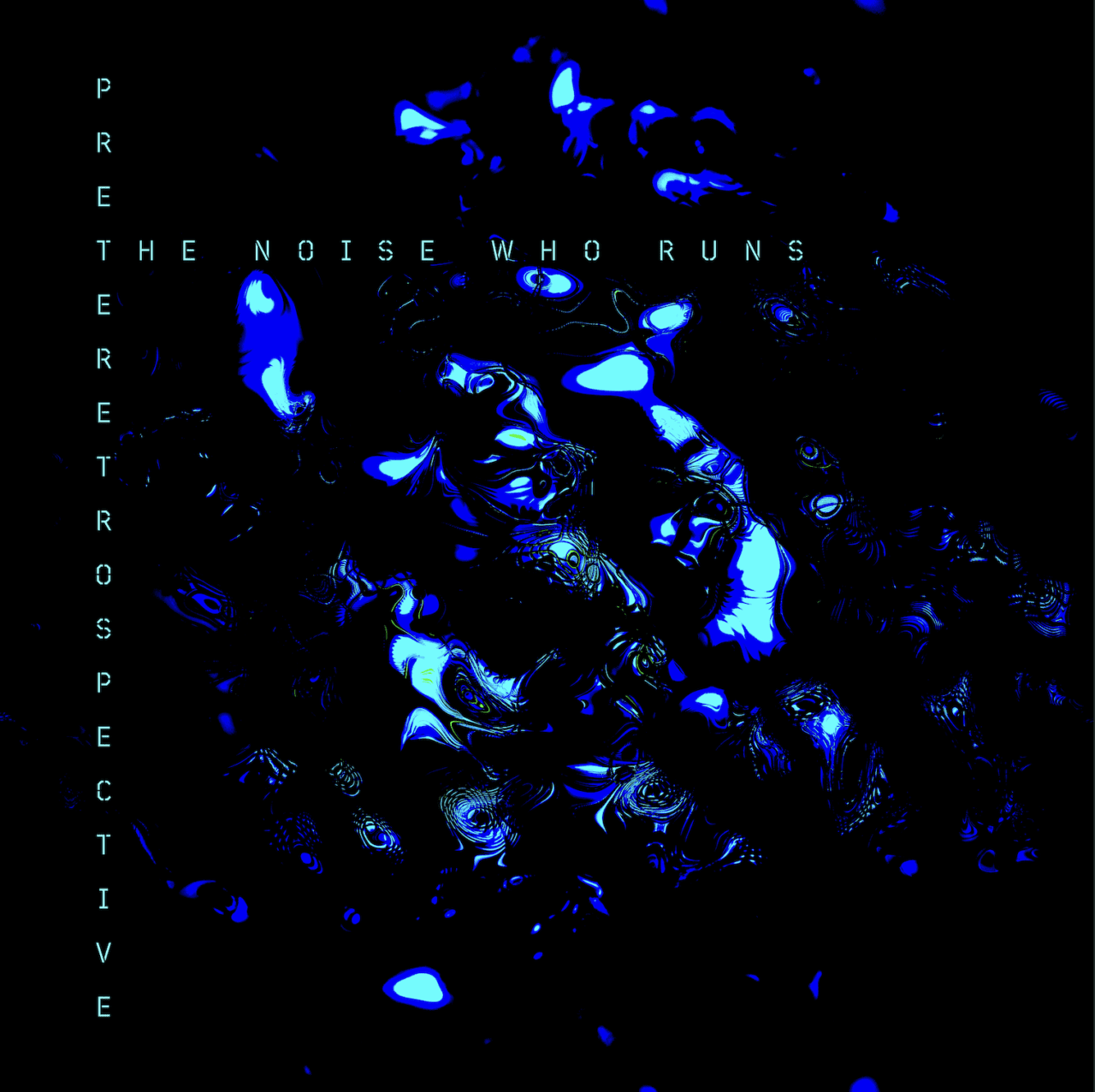
RE:GENX
With the thirtieth anniversary of Becoming X approaching, RE:GENX can almost be understood as a sequel — not in sound or style, but in spirit. Something closer to what T2 Trainspotting was to Irvine Welsh’s original novel: a return decades later to the same cultural moment, asking what became of the people and ideas that once defined it.

When Becoming X appeared in 1996, its lyrics were frequently described as abstract, cynical and psychologically dark — qualities that were embraced by the music press at the time. The songs were full of characters who felt displaced or unfinished: people navigating identity, media, desire and disillusion in a culture that promised freedom but delivered confusion.
Lines drifted between detachment and vulnerability: “I fake my life like I’ve lived too much”, “very nearly something to be”, “I hope you find yourself in a low place like home.” The characters seemed half-assembled from the fragments of the culture surrounding them — magazines predicting the future, personalities worn like costumes, identities improvised from expectation and media noise.
The perspective was deliberately ambiguous. Rather than telling stories in a conventional way, the lyrics circled around a mood: alienation in the late‑twentieth‑century consumer landscape. The world of Becoming X was full of surfaces — predictions, roles, labels and emotional performances. Even the title suggested transformation that never quite completed itself: not being, but becoming and already has-been.
Thirty years later, RE:GENX returns to the same generation — but now from the other side of time.
If the earlier songs captured young adulthood in the 1990s — ironic, sceptical, suspicious of authority — the new record examines what happened after those instincts matured into something else entirely. The question is not simply what changed politically or culturally, but what changed within the generation itself.
Many of the same tensions still exist, but they feel heavier now. The sense of drift that once appeared as personal uncertainty has hardened into something societal: exhaustion, disorientation and a strange acceptance of decline. Where the characters of Becoming X struggled to locate themselves in a confusing world, the voices in RE:GENX often recognise the confusion but no longer expect it to resolve.
In that sense the albums speak to each other across time.

The earlier record was full of identity fragments — the post‑modern sleaze, the wandering narrator of Six Underground, the anxious search for meaning in Low Place Like Home. They were people trying to understand themselves in a culture that insisted identity could be endlessly reinvented.
RE:GENX asks what happens once those identities have lived through three decades of political disappointment, economic strain and cultural fatigue.
The scepticism that once felt rebellious now often resembles detachment. Irony, once a defence against authority, sometimes becomes a refuge from responsibility. The generation that grew up questioning power has watched new forms of it consolidate — and has not always resisted as fiercely as it once imagined it would.
This is not nostalgia. Nor is it a rejection of the earlier work.
If Becoming X documented the emotional atmosphere of the late 1990s — restless, uncertain, searching — then RE:GENX documents the moment when those same instincts encounter the consequences of time.
What once felt like personal confusion now looks suspiciously like something larger.
And the generation that once insisted it would never become comfortable with the world it inherited is left wondering whether, quietly and gradually, that is exactly what happened.
A RECKONING AND A REPLY
RE:GENX is both a reckoning and a reply. Framed visually by the final image of The Breakfast Club, the album looks back at a generation once defined by scepticism, irony and refusal — and asks what happened next.
Generation X inherited expanding freedoms, cultural progress and the illusion that history naturally bends the right way. Yet the distance between the promise of that era and the reality that followed has become impossible to ignore.
Where Becoming X captured individuals drifting through a confusing cultural landscape, RE:GENX confronts the broader consequences of that confusion once it becomes collective.
This record questions how a generation that once distrusted authority became so comfortable with inaction — mistaking detachment for wisdom and silence for neutrality — while the world reshaped itself in harsher, meaner forms.
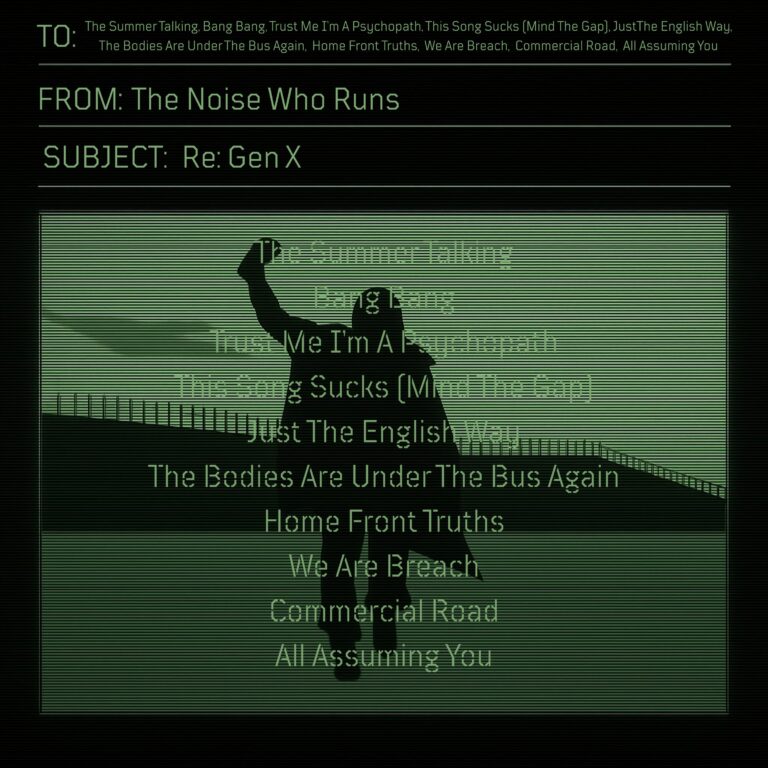
Throughout the album, exhaustion is not just personal but societal. Songs like The Summer Talking and Bang Bang explore how promise, outrage, distraction and fatigue blur into one another until even crisis feels routine.

The album returns repeatedly to the idea of momentum without direction: systems reintroduced after failure, arguments recycled without learning and emotional energy burned in spectacle rather than change. It captures a culture that is permanently overstimulated yet morally depleted — loud, reactive and strangely hollow.
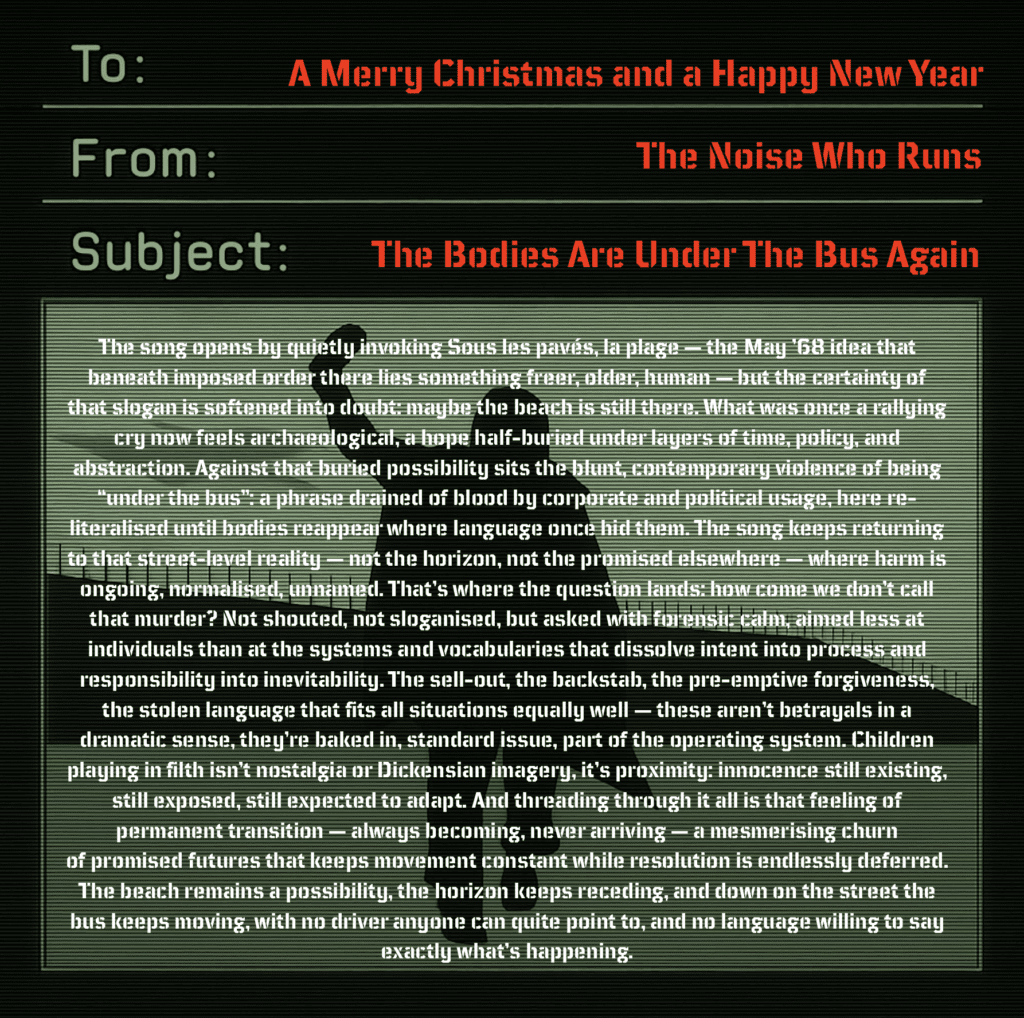
Politics runs through RE:GENX, but never as slogan or sermon. Trust Me I’m a Psychopath, The Bodies Are Under the Bus Again and Home Front Truths dissect how power survives by repetition, fear and storytelling — not just through leaders, but through the complicity of those who tolerate it.
Violence becomes normalised. Responsibility is outsourced. Corruption is softened through language until harm becomes background noise. The album asks why obvious wrongdoing is so rarely named for what it is — and how collective failure becomes survivable once it is sufficiently familiar.
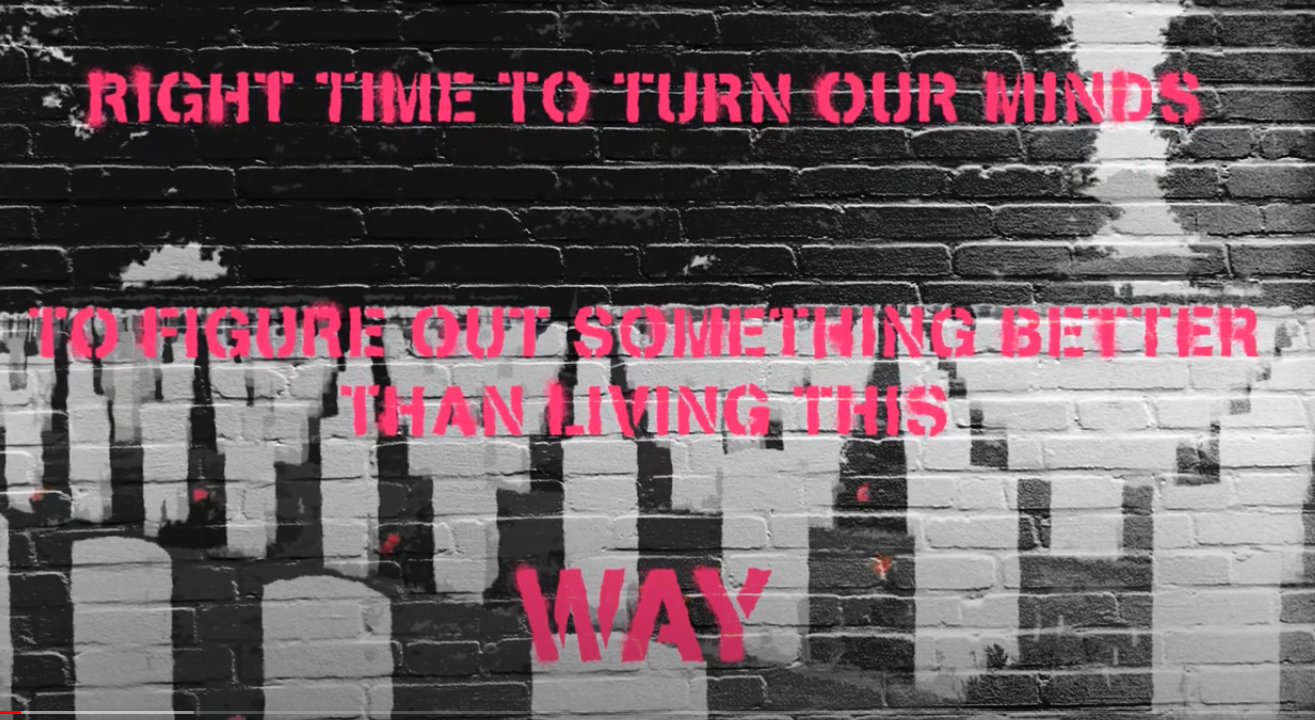
National identity and cultural habit also come under scrutiny. Just the English Way skewers the rituals of restraint, humour and quiet endurance that masquerade as virtue while enabling denial and decay. This Song Sucks (Mind the Gap) and Commercial Road confront performative morality, cowardice dressed as caution and the comfort of doing nothing while congratulating oneself for restraint.
Across the record, irony — once the natural language of Generation X — is treated not as intelligence, but as shelter. A way of avoiding responsibility while appearing aware.
RECOGNITION
RE:GENX closes not with certainty, but with recognition.
Songs such as We Are Breach and All Assuming You turn inward, examining surveillance, intrusion, tribal thinking and the collapse of shared language.
The album does not claim moral superiority or offer redemption arcs. Instead, it documents a generation caught between knowing better and doing nothing.
In that sense, the conversation that began with Becoming X never really ended. The uncertainty, detachment and cultural fragmentation that shaped that earlier record have simply matured into something heavier and more consequential.
If Becoming X explored the psychology of a generation discovering itself, RE:GENX explores what happens when that same generation realises what it failed to do with that awareness.
And the question that lingers across the album is the same one that echoes through the decades between them:
whether awareness without action is anything more than another form of surrender.

“Everything after Come and Join the Beautiful Army desperately wanted to be simpler and more direct. All the songs were already there as half‑finished demos, and I finally treated myself to a half‑decent electric guitar instead of the Cash Converters one I’d been using forever. Just playing along to try it out, the guitar found its way home into the songs and gave them a bit of impetus — Psychopath and This Song Sucks clicked first, then writing The Summer Talking and Bang Bang followed naturally. I wanted the whole record to feel more immediate: shorter songs, more traditional shapes, and lyrics that were leaner, more precise, and less overthought.”
“It all really took shape lyrically after the summer of 2024 — after the riots the summer Starmer came to power, and against the backdrop of a looming Trump 2.0 presidency. Then I chose to wait and record the vocals back home in Teesside because it felt right to put my voice in the place that made me. I went back to Hartlepool while visiting my mum, it was January 2025, and that sharpened everything — it felt like watching the consequences arrive years late, but fully formed. And I think you can sense that sharpness in the vocals.”
“This album is a reply to my own generation — what it stood for, what it stayed silent for, and how it enjoyed progress and liberty without doing much to protect any of it when it actually mattered. But it’s beyond generations, it’s humanity, society — it’s a class war. Always has been. And the powerful rely on fear and division to stop people recognising that, even when we know all the tricks


















By continuing to use the site, you agree to the use of cookies. more information
The cookie settings on this website are set to "allow cookies" to give you the best browsing experience possible. If you continue to use this website without changing your cookie settings or you click "Accept" below then you are consenting to this.